
Open for Public Participation
The Kenya National Energy Policy 2025–2034
The National Energy Policy 2025–2034 is back and open for public review. The National Assembly’s Departmental Committee on Energy has invited the public to submit memoranda — your input matters.
Why It Matters
This policy will shape Kenya's energy sector for the next decade.
It sets the direction on how the country manages energy access, infrastructure, and sustainability — and it needs to reflect the voices of all Kenyans, especially the youth who will live with its long-term impacts.
01
The policy must reflect a commitment to sustainable development, climate resilience, and equitable access to affordable clean energy — with a clear roadmap for phasing out fossil fuels.
02
A just energy transition requires the voices of all demographics — including those most affected by energy decisions in their daily lives.
03
Youth will inherit the long-term consequences of today's energy decisions. Now more than ever, your voice matters.
04
By participating, you help ensure the process is inclusive, transparent, and responsive to the needs of all communities across Kenya.
What the Policy Covers
Key areas addressed in the 2025–2034 National Energy Policy
The policy outlines Kenya’s strategic vision for energy over the next decade, aiming to deliver affordable, reliable, and sustainable energy that drives national development and climate resilience.
SUSO BNG Top Line Comments
Where the policy falls short — and what needs to change
The Kenya National Energy Policy 2025–2034 aims to deliver affordable, reliable, and sustainable energy. However, when examined critically, the policy reveals key gaps — particularly regarding its environmental commitments and the protection of community rights.
Our Position
While the policy positions Kenya as a leader in the clean energy transition, it retains significant commitments to fossil fuels and lacks robust protections for communities and ecosystems affected by energy development.
Issue 01
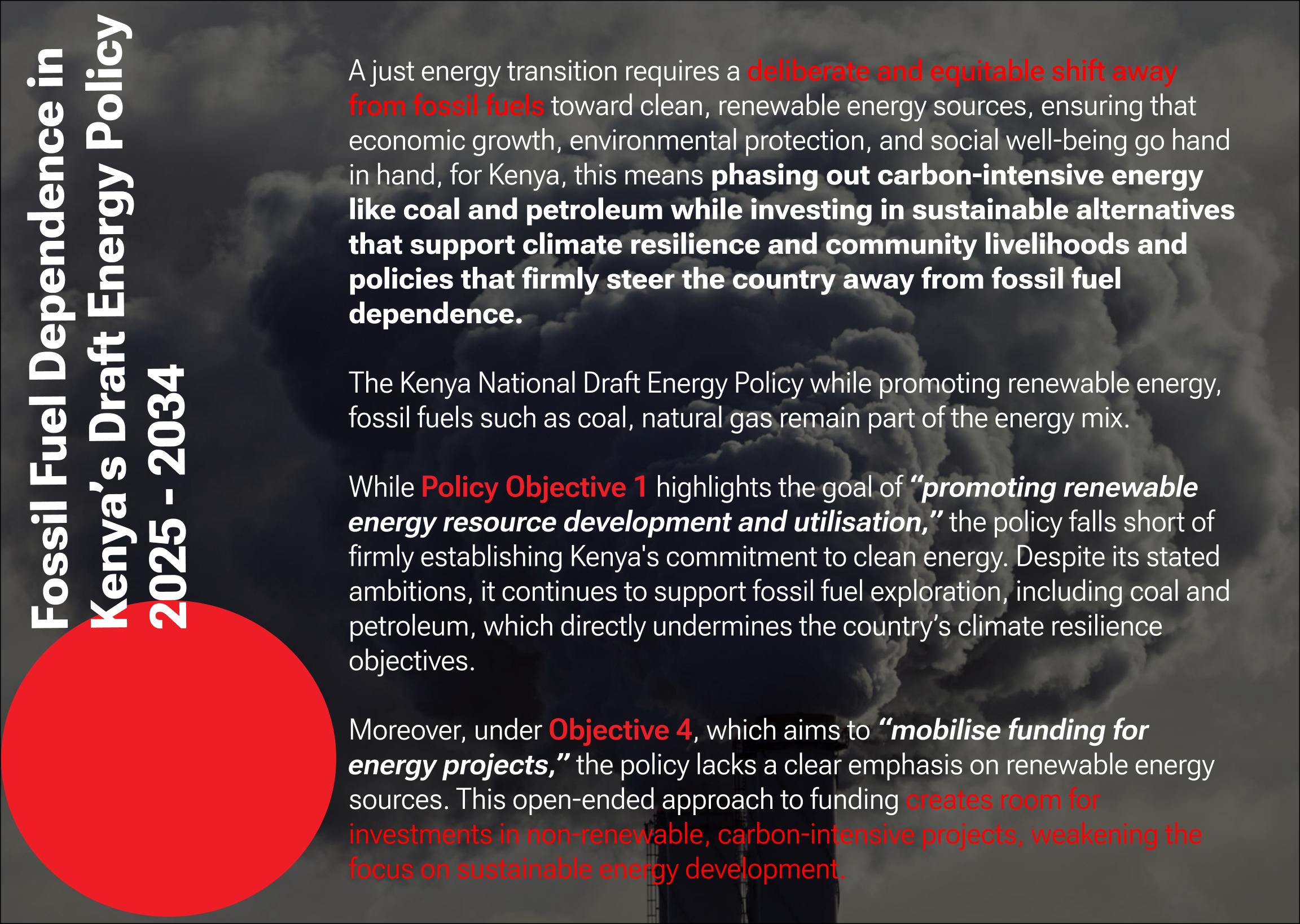
Fossil Fuel Dependence
The policy promotes renewable energy but still retains fossil fuels such as coal and natural gas in the energy mix. This undermines Kenya's climate resilience objectives.
Recommendation: Establish clear phase-out targets for fossil fuels and prioritise renewable energy investments. Objective 4 should be revised to focus on green financing mechanisms that support solar, wind, and geothermal projects.
Issue 02
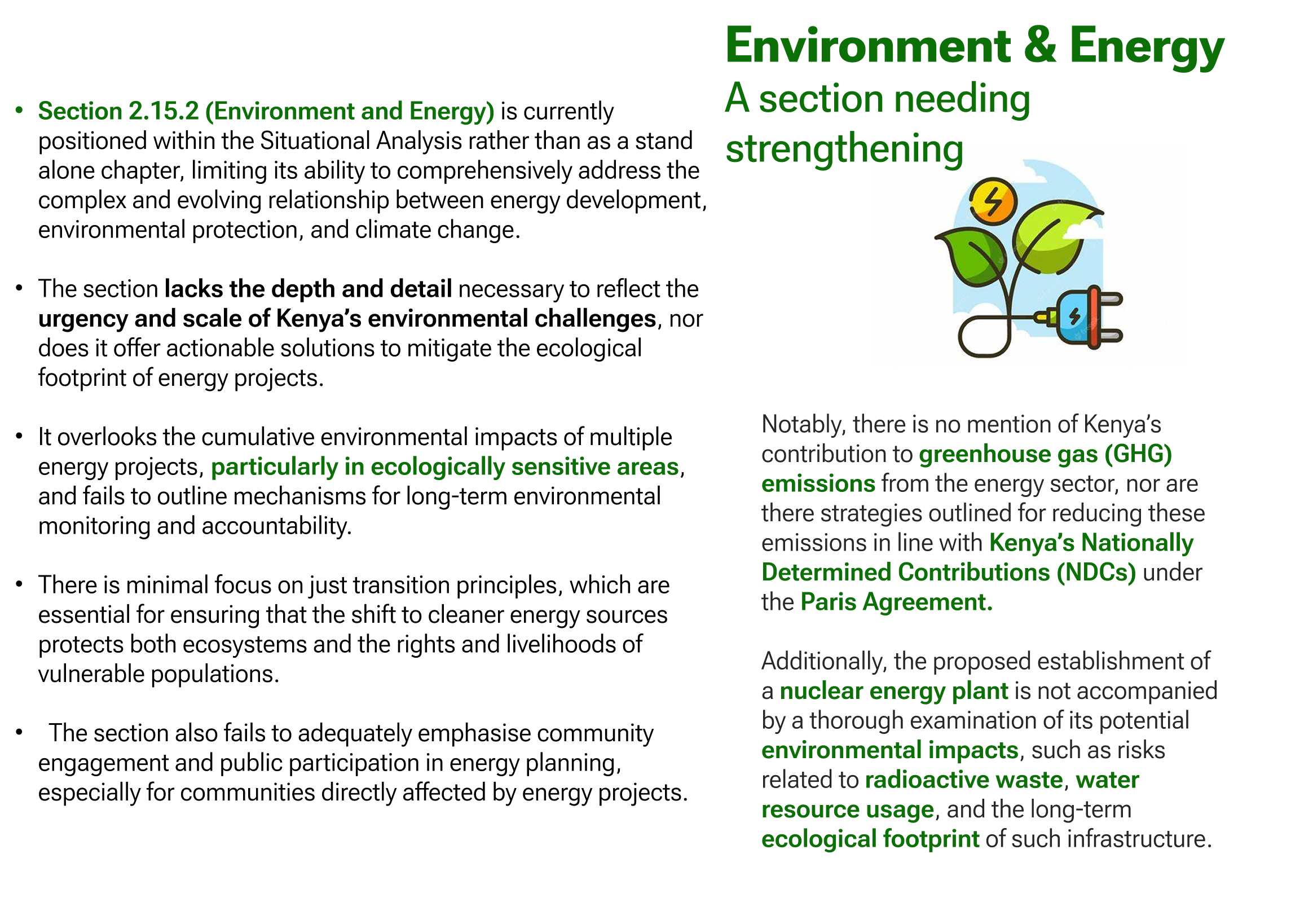
Environmental Protection
Section 2.15.2 on "Environment and Energy" lacks depth and actionable solutions for mitigating the ecological impacts of energy projects.
Recommendation: Elevate this section into a dedicated chapter on environment, energy, and climate change. It should address cumulative environmental impacts, strengthen Environmental and Social Impact Assessments (ESIAs), and promote community engagement in energy planning.
Issue 03
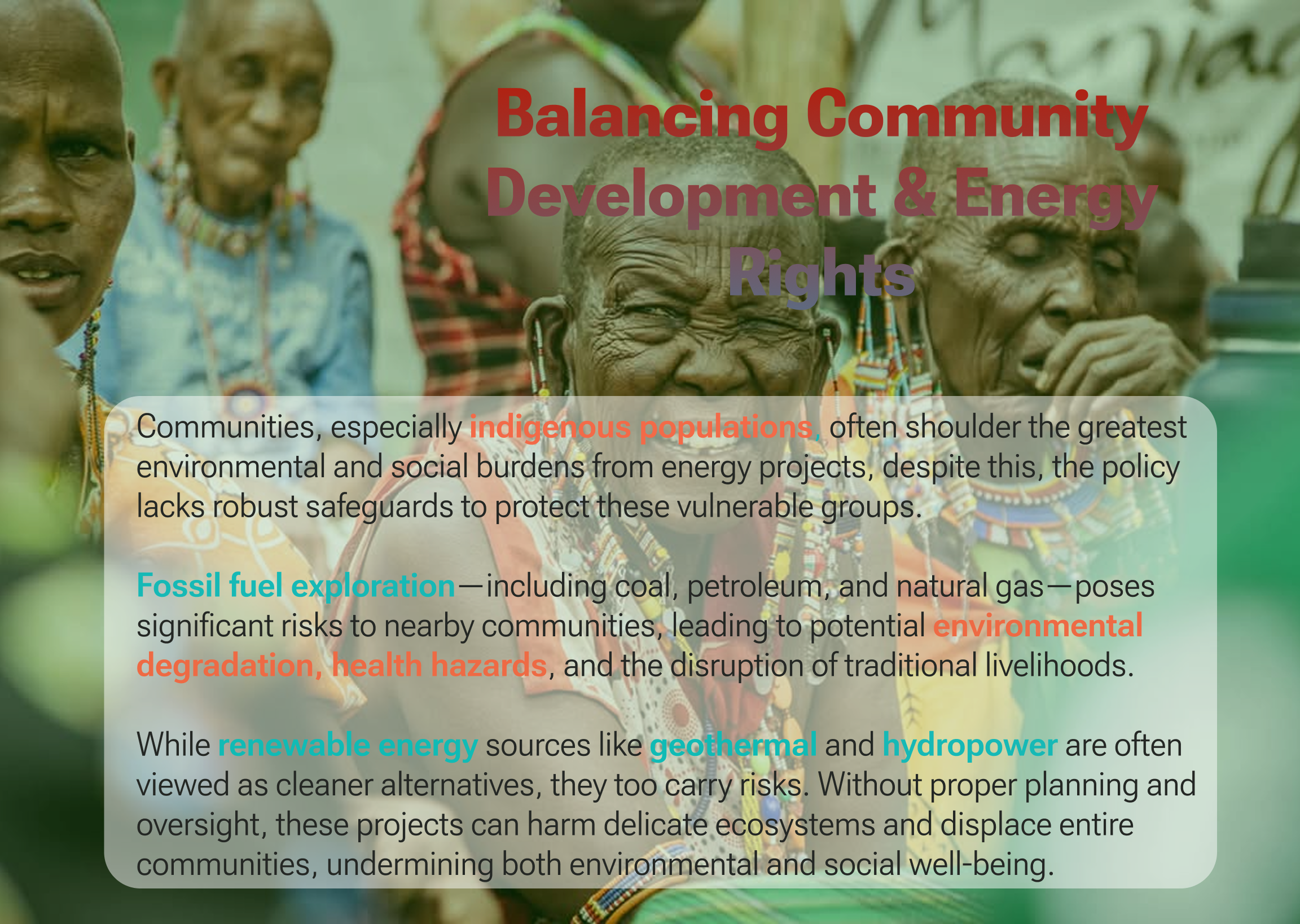
Community Rights and Just Transition
The policy does not provide adequate safeguards for communities — particularly indigenous populations — who often bear the social and environmental costs of energy projects.
Recommendation: Incorporate stronger safeguards to protect community rights, ensure public participation in energy decisions, and introduce a just transition framework that aligns energy development with social equity and environmental sustainability.
Issue 04
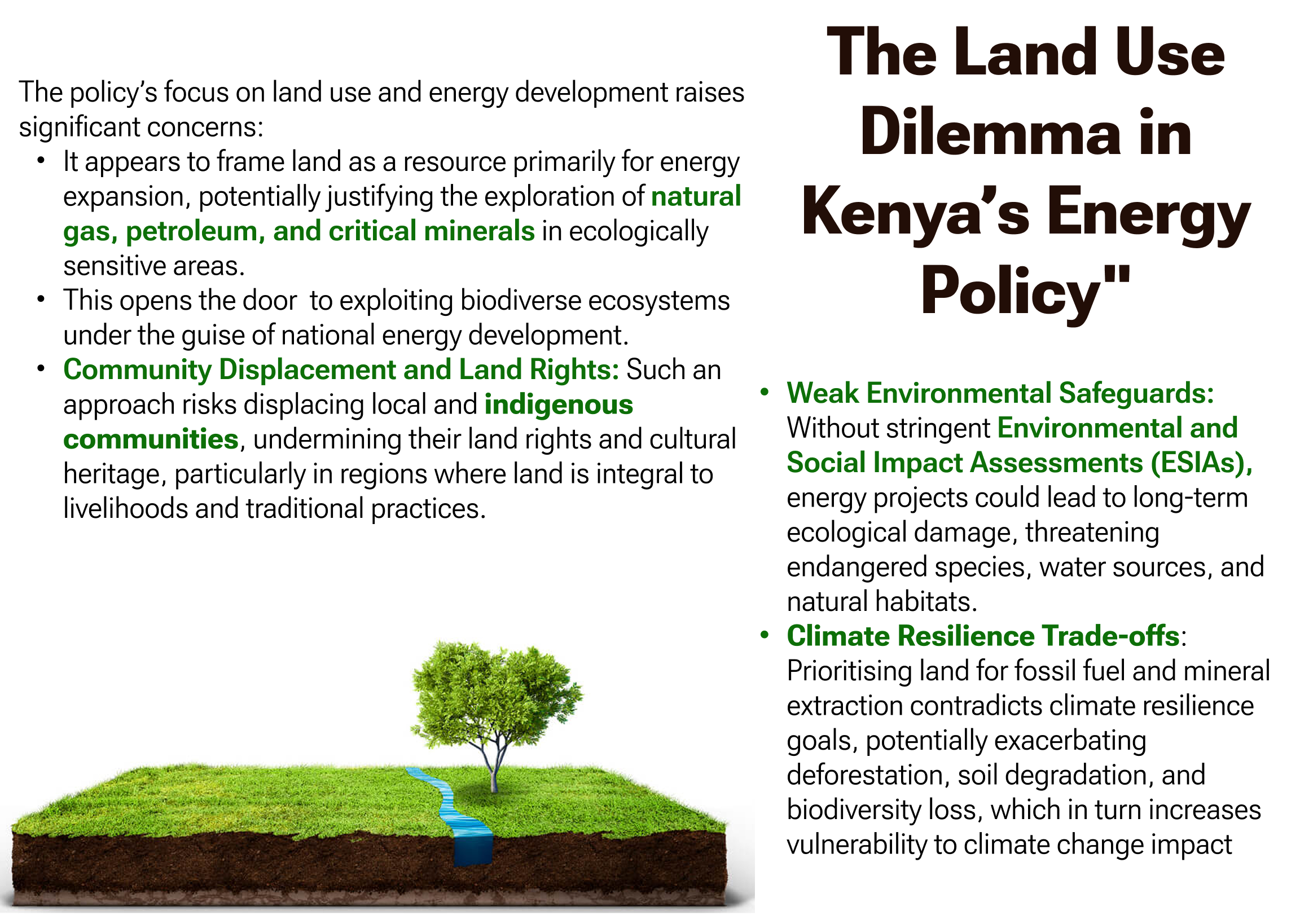
Land Use and Energy Development
The current policy risks framing land primarily for energy expansion, particularly in ecologically sensitive areas, which could lead to displacement of communities and environmental degradation.
Recommendation: Redefine land use policies to balance development with ecosystem preservation, ensuring that sensitive areas are protected from energy extraction activities.
Issue 05
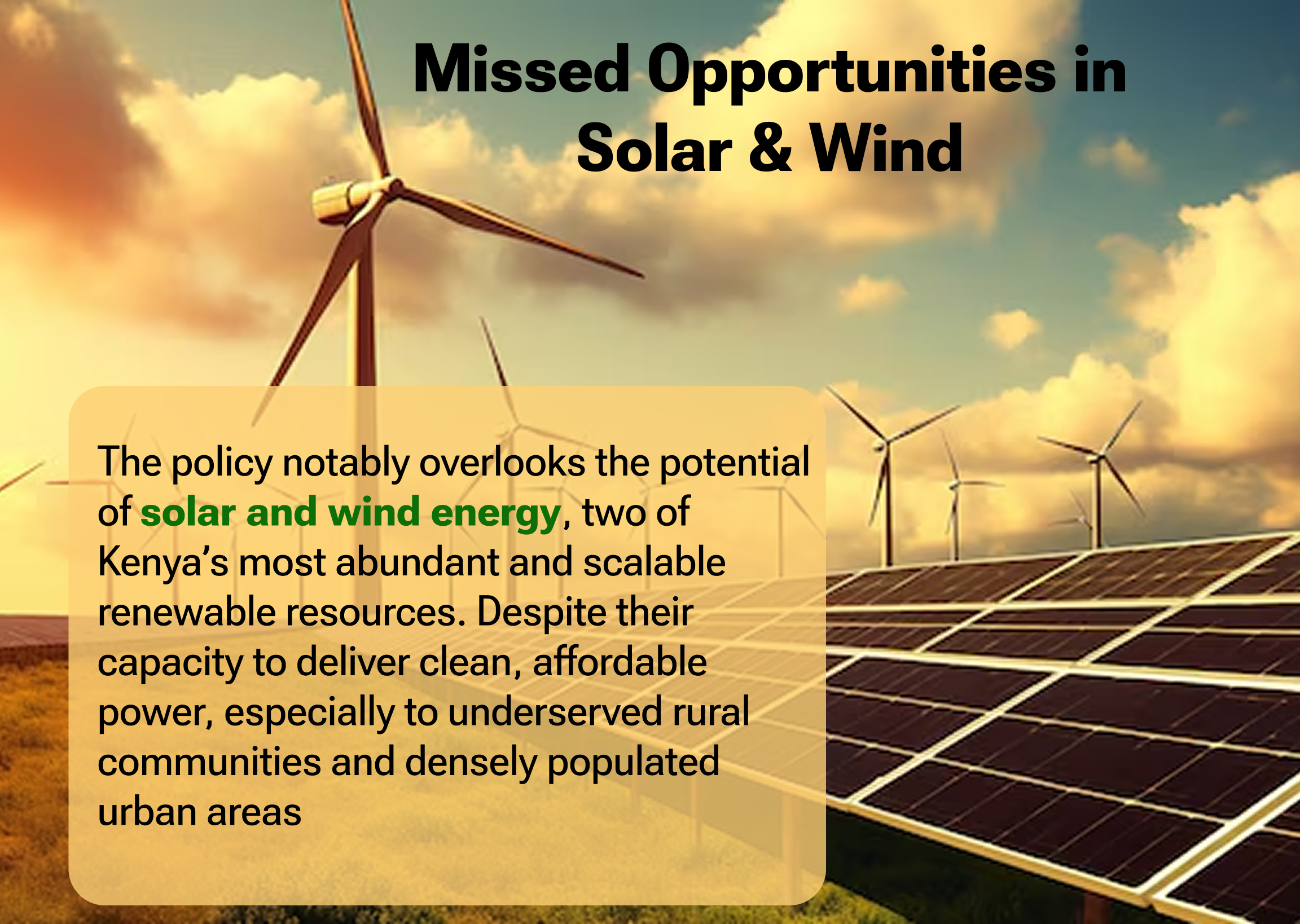
Solar and Wind Energy
The policy overlooks the potential of solar and wind energy, despite Kenya's abundant resources in these areas.
Recommendation: Recognise solar and wind as integral to Kenya's clean energy transition. Introduce incentives to attract investment and encourage local manufacturing, while prioritising energy access for rural and underserved communities.
Take Action
Send your feedback to the National Assembly
The Clerk of the National Assembly is accepting public memoranda on the policy. Enter your name below and a pre-filled email will open in your mail app — review it, personalise it if you wish, and send.
Enter your full name in the form below.
A pre-written petition will open in your email application.
Review the details and make any edits you deem necessary.
Send it to cna@parliament.go.ke — Clerk of the National Assembly, P.O. Box 41842-00100, Nairobi.
Subject: Feedback and Recommendations on the Kenya National Energy Policy 2025–2034
This will open your default email app with a pre-filled message addressed to the Clerk of the National Assembly.
Visit www.energy.go.ke/downloads & www.petroleum.go.ke/downloads for more information
SUSO BNG KE NATIONAL DRAFT ENERGY POLICY TOP LINE COMMENTS
The Kenya National Energy Policy 2025–2034 sets out Kenya’s strategic vision for the energy sector over the next decade, aiming to deliver affordable, reliable, and sustainable energy that drives national development, economic growth, and climate resilience. It highlights strategies and frameworks to address energy access, efficiency, and sustainability challenges while positioning Kenya as a leader in the clean energy transition as outlined in the Executive Summary.
However, when examined critically, the policy reveals key gaps, especially regarding its environmental commitments and the protection of community rights.
Share Your Comments
Shape the Future of Public Participation in Kenya Share Your Thoughts and Comments
Highlight areas of THE KENYA NATIONAL ENERGY POLICY 2025 – 2034 that could benefit from further clarification and improvement.
Let’s shape the future of public participation in Kenya together!